Fenghuang Ancient Town: A Guide for Trips from Zhangjiajie
Where the old town sits, how to reach it from Zhangjiajie, whether to go as a day trip or stay a night, and what is actually there once you arrive.
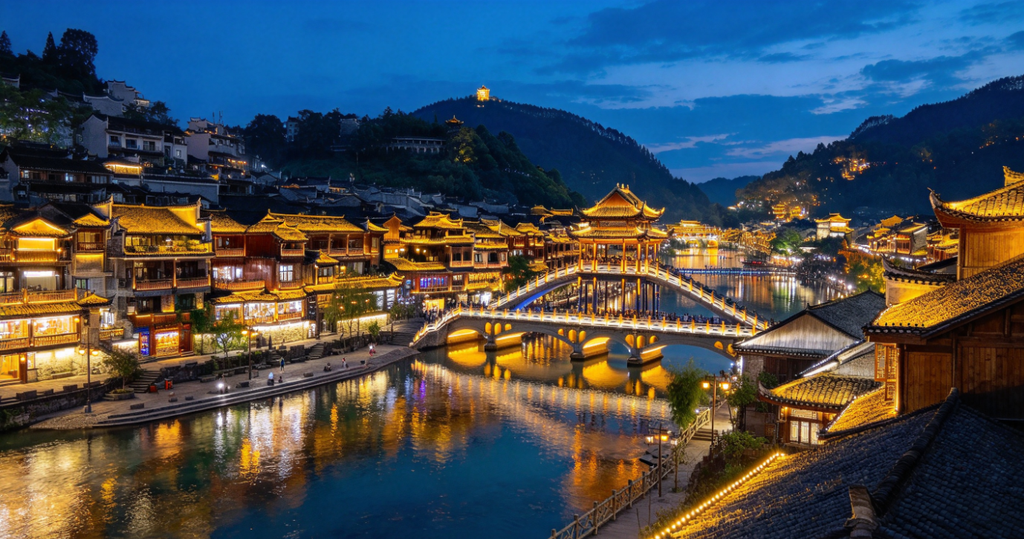
The Tuojiang at dusk, when the stilt houses and the river below them start to light up.
START HERE
Fenghuang is not in Zhangjiajie
The first thing to sort out is the geography. Fenghuang Ancient Town belongs to Fenghuang County, in Xiangxi Tujia and Miao Autonomous Prefecture — roughly 230 km west of Zhangjiajie, and a different prefecture entirely.
That matters because the two places get bundled together online as if they were one trip. They are not. Zhangjiajie is the sandstone pillars and the mountain; Fenghuang is a riverside town of wooden houses built out over the water, with a history that goes back to 1704 and a street plan that has kept its Ming and Qing shape. It was added to China’s list of national historical and cultural cities back in 2001, well before the town became widely known abroad.
What they do share is a rail line and a region. The high-speed railway that opened at the end of 2021 runs west from Zhangjiajie through Furong Town and Jishou to Fenghuang, which is what turned a four-hour drive into a trip you can tack onto the end of a Hunan route.
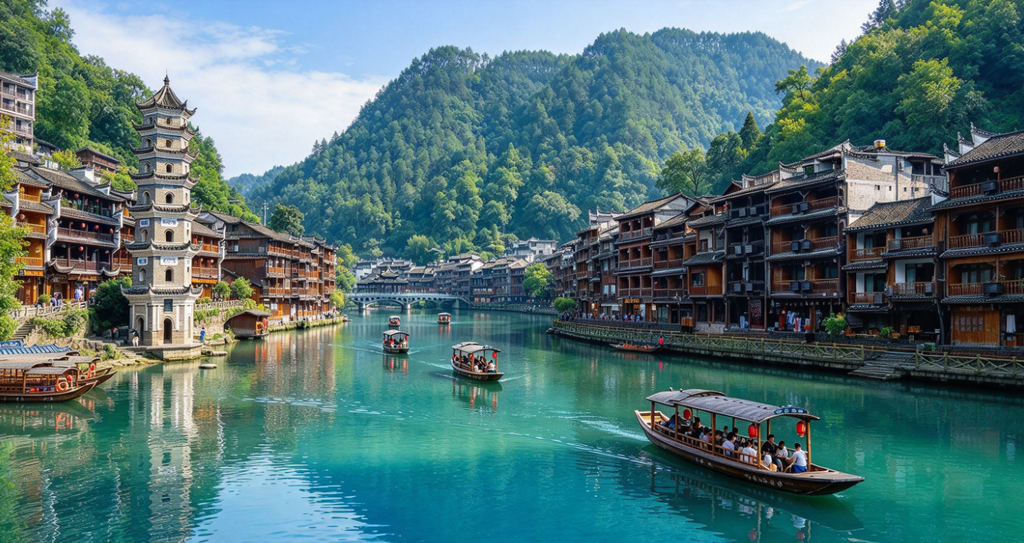
The Tuojiang runs the length of the old town, and the boats on it are the town’s oldest form of transport.
GETTING THERE
Zhangjiajie to Fenghuang, three ways
One rail line does the heavy lifting. Here is how the stops sit on it, then what each option costs you in time and flexibility.
The line runs west from Zhangjiajie West through Furong Town and Jishou East to the Fenghuang Ancient Town station.
🚄
High-speed rail — the default option
Zhangjiajie West to Fenghuang Ancient Town station takes around an hour. From the station, the maglev line or a short taxi ride brings you to the riverside. Bring your passport: tickets are tied to ID, and it is easiest to book through the official rail app.
🚗
Private car or driver
Direct, door to door, and it lets you break the drive where you like. Several hours on the road.
🚏
Stop at Furong Town
Half an hour from Zhangjiajie West on the same line, and a natural place to break the journey westward.
There used to be a direct coach between the two, but it has largely disappeared from the timetable; treat the railway as the reliable option and check current schedules before you fix your dates. Times and fares move with the season, so the transport guide is the page to check alongside this one, and our planning desk can seat-reserve the rail leg if you would rather not do it in Chinese.
HOW LONG
A day trip or an overnight?
The town is compact, and that is exactly why the length of stay decides what you actually see.
One night
Enough for the town
Arrive in the early afternoon, walk the lanes while the light is still on the river, take a boat, eat by the water, then stay out for the hour after dark when the whole town is lit. Leave the next morning. This is the version that covers the town itself, and it needs one night rather than one day.
Two nights
Adds the countryside
The extra day goes outside the old town — to the Miao villages and the terraced hills around the county, where the culture the town is famous for actually lives. It also gives you a second evening for the lights, which matter here more than they do almost anywhere else on a Hunan route.
Going and returning on the same day is possible now that the railway is quick, but the arithmetic is unkind: a large share of the day goes on the two trains and the transfers at either end, and you would be on your way back before the town lights up. Fenghuang is at its best in the evening and early morning, and a day trip takes away both.
In practice the town tends to sit at one end of a longer trip rather than in the middle of a Zhangjiajie stay. The itinerary ideas show where that fits; if your whole trip is built around Zhangjiajie itself, the park guide and the pillar article are the pages that matter more.
WHAT IS THERE
Four things the town is actually made of
Not a checklist of ticketed sights — these are the four things that shape a visit, and the four you will photograph.
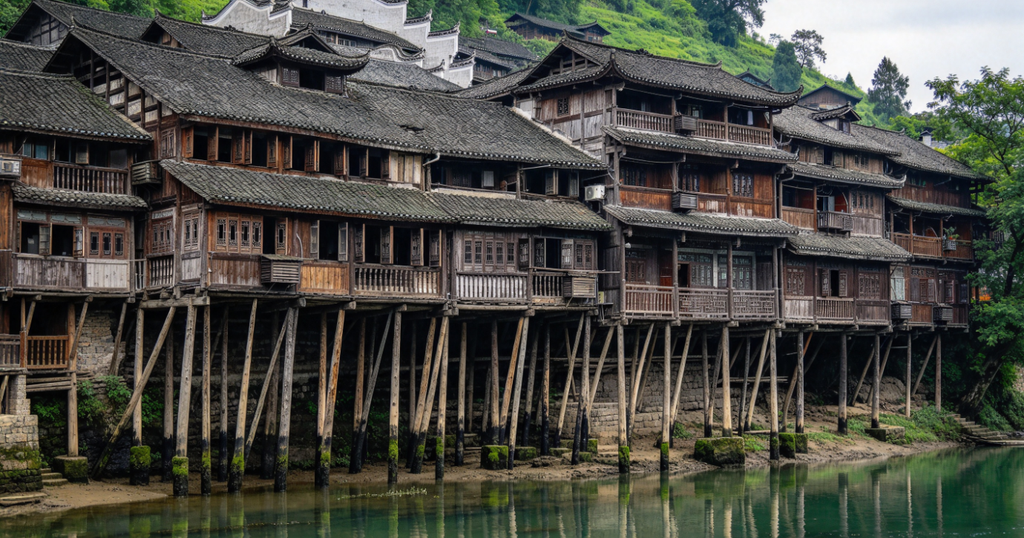
The stilt houses
Wooden houses carried on posts out over the water — the shape the whole town is known for, and still lived in.
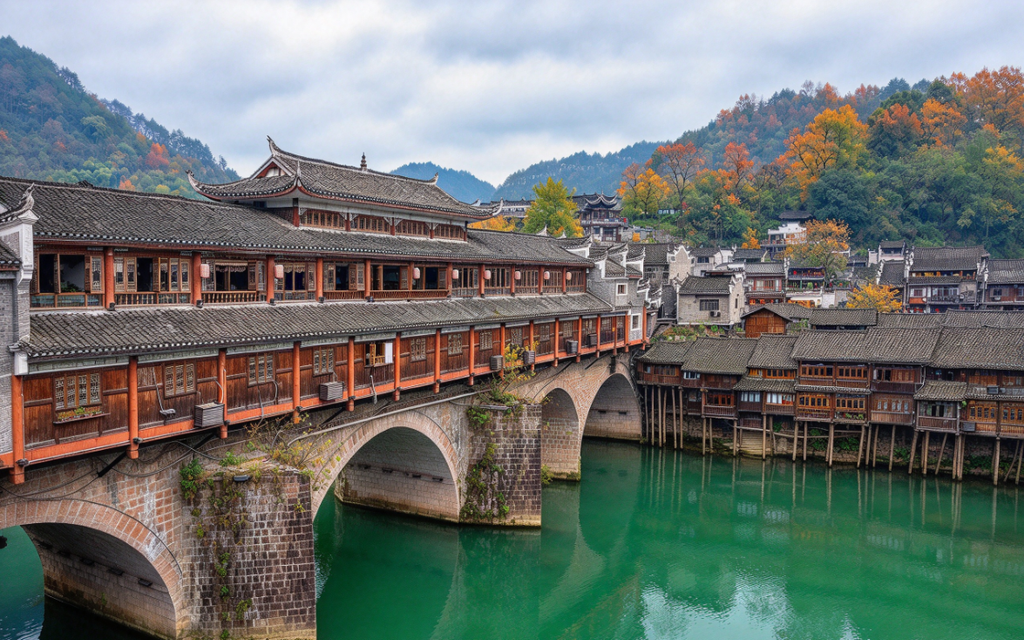
The Hong Bridge
A roofed bridge on stone piers; the walkway across its upper level looks straight down the river.
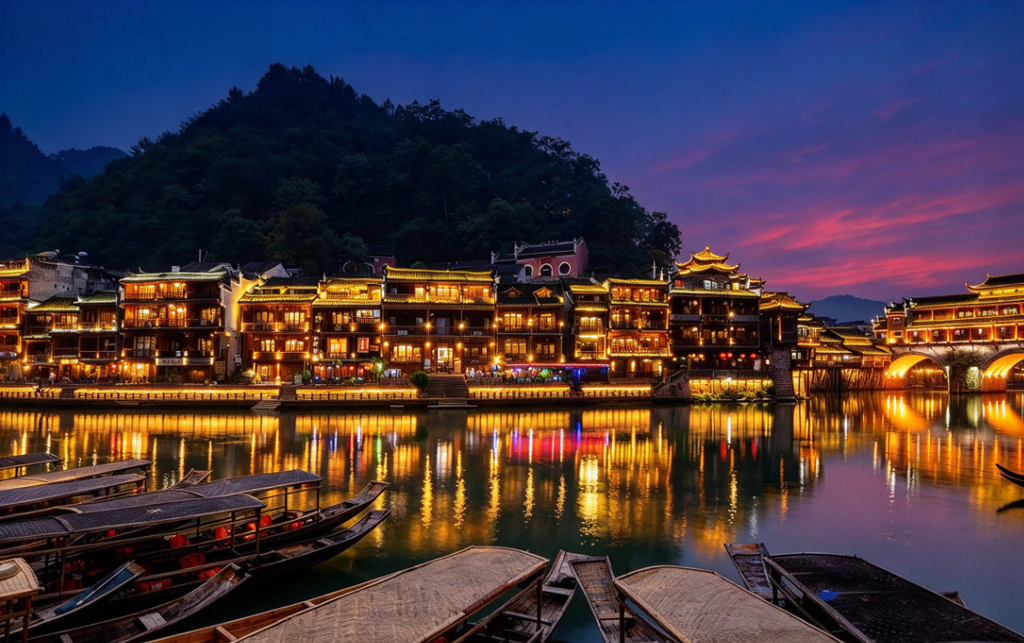
The lights after dark
The hour or two after sunset, when the riverside is lit and the town turns into the picture people come for.
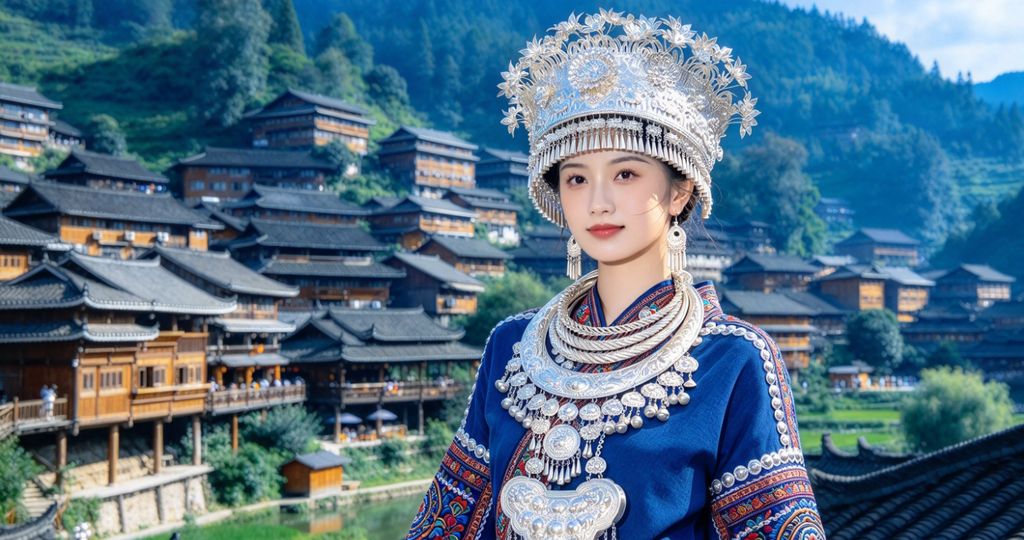
The Miao countryside
Villages in the hills around the county, with silverwork, embroidery and festivals of their own.
The town is Miao and Tujia rather than Han, and more than two-thirds of the county’s people belong to one of those two groups. That is the culture behind the costumes, the singing and the silverwork you will see along the river — and it is a living thing in the villages outside the walls, not only a performance put on for visitors. If the ethnic side of the trip is a priority for you, the cultural experiences page covers what we arrange around Zhangjiajie, and this corner of Hunan is where that thread continues west.
One name is worth knowing before you arrive. Shen Congwen, one of modern China’s best-known writers, grew up in this county and set his novel Border Town here — a quiet story about river life and country people that is the reason the town ended up on the literary map at all. His former residence is one of the ticketed sights in town; the book is the better introduction.
BEFORE YOU GO
Four things worth knowing
The practical points that change how the visit goes, without the fixed numbers that go out of date.
There is no gate fee for the town
The old town itself is open, and you can walk the lanes and the riverside without a ticket. The individual sights inside it — the former residences, the towers, the boats — are sold separately, so you pay for what you actually want rather than a single package. Ticketing here has changed more than once, so check it on arrival.
The evening is the point
The riverside lights come on after sunset, and that is when the town is at its liveliest — and at its busiest. If you are staying the night, keep the first evening free rather than planning to be on a train in it.
The lanes are stepped
The riverside walk is level, but the streets rising behind it are stone steps in places, so the town is easier in comfortable shoes. Wheeled luggage is awkward on the flagstones, and some guesthouses are reached on foot.
Book the riverside ahead
The rooms with a view of the water are the ones people want, and they go first around weekends and holidays. If a river view is the reason you are going, fix the accommodation before you fix the trains.
On when to go: the town is in the hills and has a wet, humid climate, and it fills up hard around Chinese public holidays. The best time to visit page covers the season question for the region as a whole, and it applies here too. For where to sleep — in the old town or outside it — the where to stay guide has the trade-offs.
COMMON QUESTIONS
Fenghuang Ancient Town FAQ
Is Fenghuang Ancient Town part of Zhangjiajie?
No. Fenghuang is a county town in Xiangxi Tujia and Miao Autonomous Prefecture, roughly 230 kilometres west of Zhangjiajie and in a different prefecture. It is a separate place with its own travel time, which is why it works best added to a Hunan route rather than squeezed into a Zhangjiajie day.
How do I get from Zhangjiajie to Fenghuang?
The quickest way is the high-speed railway from Zhangjiajie West to Fenghuang Ancient Town station, which takes around an hour. The station sits outside the old town, so the last stretch is covered by the maglev line or a short taxi ride. By road it is a drive of several hours.
Do I need a ticket for Fenghuang Ancient Town?
There is no entry fee for the old town itself, and you can walk the lanes and the riverside without one. The individual sights inside it, such as the former residences, the towers and the boat trips on the Tuojiang, are ticketed separately, so you pay only for what you want to go into.
Can I see Fenghuang as a day trip from Zhangjiajie?
It can be done by rail, but it makes for a long day, and you would be on a train again before the town lights up after dark. Staying one night changes the visit completely and costs you only a night of your route.
What is Fenghuang Ancient Town known for?
Stilt houses built out over the Tuojiang River, the arched Hong Bridge, stone lanes that have kept their Ming and Qing layout, and the Miao and Tujia culture of the surrounding countryside. The writer Shen Congwen set his novel Border Town in this corner of Hunan, which is why the town is known abroad at all.
KEEP EXPLORING
Next steps
Fenghuang rarely stands alone. These are the pages that decide how it fits.
📅
How two to five days are divided — and where an overnight in Fenghuang slots into a longer Hunan route.
🧭
If you would rather the trains, transfers and nights were arranged for you.
Adding Fenghuang usually means extending the trip rather than replacing a Zhangjiajie day. If your dates are set, the planning form is the quickest way to find out whether it fits.
Rather have the plan built for you?
Send your dates, your group and anything you would rather skip. We will come back with a day-by-day route and a clear quote — free, and with no obligation to book.